
AI capability, built around your profession.
We start with your profession. A public health professional learns AI in the context of public health; a clinical researcher, in the context of clinical research.

Public Health + AI
Build applied AI capability across public health specialisations.

Clinical Research + AI
Build AI capability for modern clinical research.

Pharmaceuticals + AI
Build AI capability across the pharmaceutical lifecycle.
Health Systems + AI
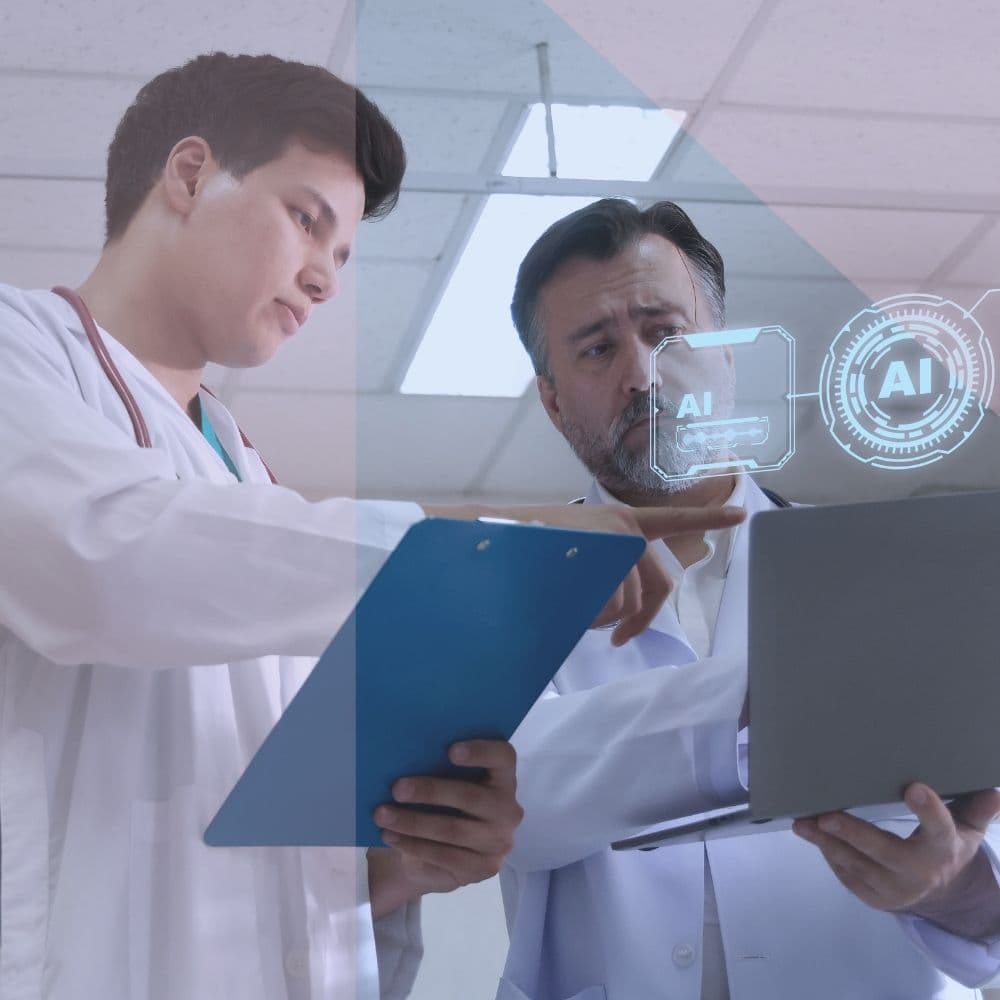
Build AI capability for better health systems.

Economics + AI
Build AI capability for analysis and decision-making.
Progress as far as you want.
There is a difference between knowing how to use an AI tool and being capable of leading AI-enabled work within an organisation. Each level builds on the last.
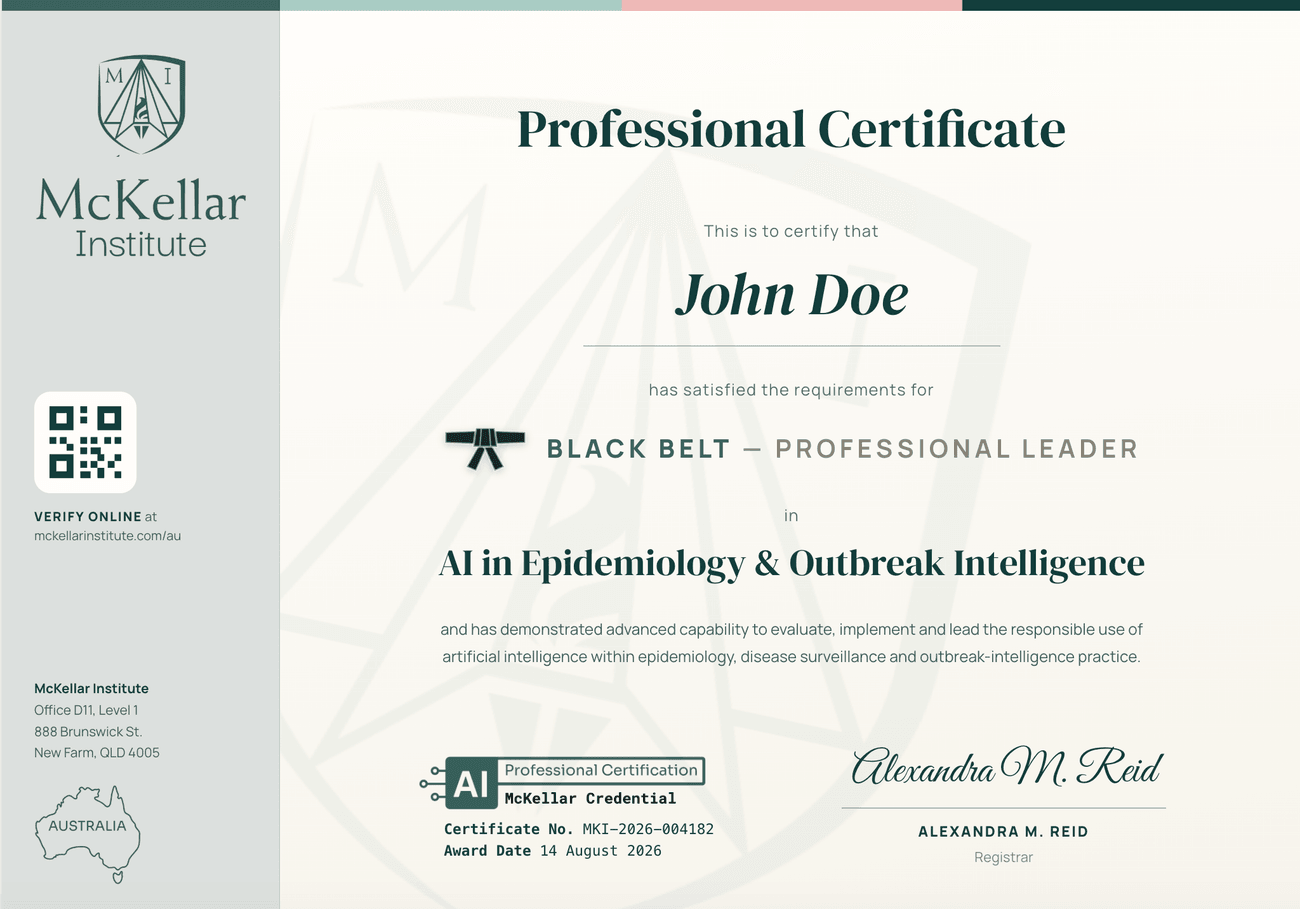
From White Belt to Black Belt — AI-aware professional to advanced applied practitioner.
The profession stays.
The workflow changes.
The responsibility stays with the professional. What changes is the speed, scale and intelligence of the workflow — and the capability organisations now expect. Keep scrolling — the new way of working arrives over the old.
Manual effort. Fragmented information. Reactive decisions.
Hunting across multiple disconnected sources before the real work can start.
Reading, summarising and re-summarising by hand.

Insight arrives after the moment has passed.
Spreadsheets, documents and systems that don't talk.
Most of the day goes to admin, not judgement.
Faster synthesis. Prioritised signals. The judgement stays yours.
Evidence discovery and summarisation in minutes, not days.
Recognition across datasets no person could read alone.
Decision support that surfaces what matters first.
Connected, efficient and repeatable ways of working.

The day shifts to deciding and acting — your expertise in control.



The world doesn't need more AI engineers. It needs professionals who can work with AI.
Third-party evidence keeps making the same point: in healthcare, public health, pharma and clinical research, the demand is for domain experts with applied AI capability.
Health systems worldwide are being urged to build AI competency across their existing workforce — not to replace clinical and public health judgement, but to strengthen it.
The gap isn't more AI engineers. It's health professionals who can apply AI safely inside their own practice.

Employers across healthcare, pharma and research are rewriting job descriptions: the same professional roles, now with applied AI capability listed as essential.
The fastest-growing opportunity sits with professionals who add AI to what they already do best.

The constraint on AI value in specialised industries is no longer the tools — it is the shortage of domain experts who know how to work with them responsibly.
Certification that pairs professional context with AI capability is exactly what organisations say they're missing.
More capability. More opportunity.
The goal isn't another certificate sitting in a folder. It's greater professional capability.